


Last Updated on September 2, 2026 by Nurseslab.in Editorial Team
The context of the study is a critical section in academic and research writing that provides background information about the research topic, situates it within a broader field, and explains the factors influencing the research. This section helps readers understand why the study is significant, the problem it addresses, and the environment in which the research is conducted.

This article offers a comprehensive guide to writing the context of a study, with examples to illustrate its importance and structure.
Context of the Study
The context of the study describes the setting, circumstances, and background that frame the research. It outlines the broader area of inquiry, introduces the research problem, and highlights the factors influencing the study. This section ensures readers understand the relevance and scope of the research.
For example:
- In a study on remote work productivity, the context might include the rise of remote work due to the COVID-19 pandemic, the challenges of virtual collaboration, and the global shift toward flexible work environments.
Importance of the Context of the Study
- Provides Background: Offers readers a clear understanding of the research problem’s origins and significance.
- Establishes Relevance: Demonstrates how the research fits into the broader academic, social, or practical landscape.
- Clarifies Scope: Defines the boundaries and limitations of the research topic.
- Engages Readers: Highlights the importance of the study, making it relatable and compelling.
- Guides the Reader: Acts as a roadmap for understanding the rationale behind the research objectives and methodology.
Components of the Context of the Study
Format and style of the text may differ depending on the discipline and the journal. However, broadly, the background of the study components is structured as follows:
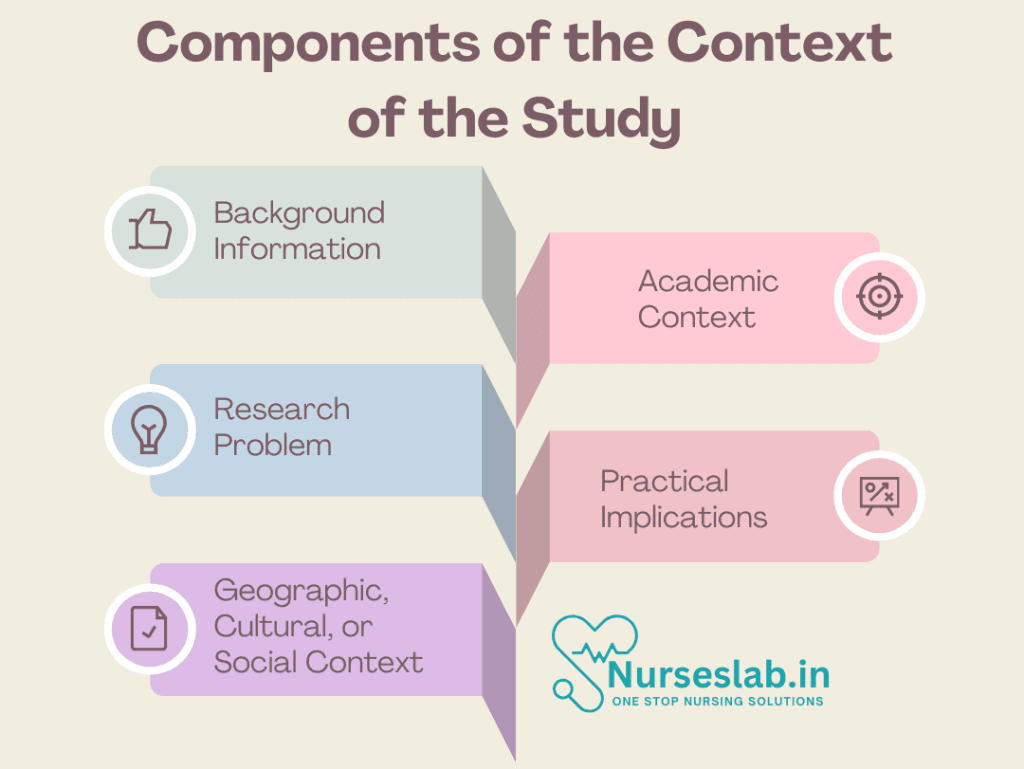
1. Background Information
- Provide general information about the topic and the key issues.
- Include relevant historical, social, or academic developments.
Example:
In a study on climate change communication:
- “Climate change has become a global concern, with rising temperatures and extreme weather events highlighting the urgency of mitigation and adaptation strategies. Effective communication plays a pivotal role in raising public awareness and driving action.”
2. Research Problem
- Identify the gap or issue that your research addresses.
- Explain why this problem is important.
Example:
- “Despite the widespread dissemination of climate-related information, public engagement remains low, and misinformation continues to hinder collective action.”
3. Geographic, Cultural, or Social Context
- Specify the location, population, or cultural setting relevant to the research.
Example:
- “This study focuses on the rural communities in Southeast Asia, where access to accurate climate information is limited, impacting local adaptation efforts.”
4. Academic Context
- Reference existing studies and theoretical frameworks related to the topic.
- Highlight gaps or unresolved questions in the literature.
Example:
- “Previous research has examined the role of social media in disseminating climate information, but few studies have explored its impact in low-resource settings.”
5. Practical Implications
- Discuss how the study contributes to solving real-world problems or advancing knowledge.
Example:
- “By understanding communication barriers, this study aims to inform strategies for improving climate literacy and fostering community
- resilience.”
Difference between the background of the study, introduction, and literature review
Now that we understand the role of the Background of the Study within a research paper, let’s delve deeper to differentiate it from two other crucial components of the paper – the Introduction and the Literature Review.
- Background of the Study: This section provides a comprehensive context for the research, including a statement of the problem, the theoretical or conceptual framework, the gap that the study intends to fill, and the overall significance of the research. It guides the reader from a broad understanding of the research context to the specifics of your study.
- Introduction: This is the first section of the research paper that provides a broad overview of the topic, introduces the research question or hypothesis, and briefly mentions the methodology used in the study. It piques the reader’s interest and gives them a reason to continue reading the paper.
- Literature Review: This section presents an organized summary of the existing research related to your study. It helps identify what we already know and what we do not know about the topic, thereby establishing the necessity for your research. The literature review allows you to demonstrate how your study contributes to and extends the existing body of knowledge.
While these three sections may overlap in some aspects, each serves a unique purpose and plays a critical role in the research paper.
Tips for writing the background of the study
1.Keeping the section concise and focused
Maintain clarity and brevity in your writing. While you need to provide sufficient detail to set the stage for your research, avoid unnecessary verbosity. Stay focused on the main aspects related to your research problem, its context, and your study’s contribution.
2.Ensuring the background aligns with your research questions or hypotheses
Ensure a clear connection between your background and your research questions or hypotheses. Your problem statement, review of relevant literature, theoretical framework, and the identified gap in research should logically lead to your research questions or hypotheses.
3.Citing your sources correctly
Always attribute the ideas, theories, and research findings of others appropriately to avoid plagiarism. Correct citation not only upholds academic integrity but also allows your readers to access your sources if they wish to explore them in depth. The citation style may depend on your field of study or the requirements of the journal or institution.
4.Bridging the gap between existing research and your study
Identify the gap in existing research that your study aims to fill and make it explicit. Show how your research questions or hypotheses emerged from this identified gap. This helps to position your research within the broader academic conversation and highlights the unique contribution of your study.
5.Avoiding excessive jargon
While technical terms are often unavoidable in academic writing, use them sparingly and make sure to define any necessary jargon for your reader. Your Background of the Study should be understandable to people outside your field as well. This will increase the accessibility and impact of your research.
Steps to Write the Context of the Study
Any researcher needs to understand the steps that go into writing an effective background of the study. Since you don’t have clarity in the early stages, you need to collect more information via preliminary research. Then, you should organize your information in a structure that can seamlessly lead up to your research paper in a way that shows the significance of your study.
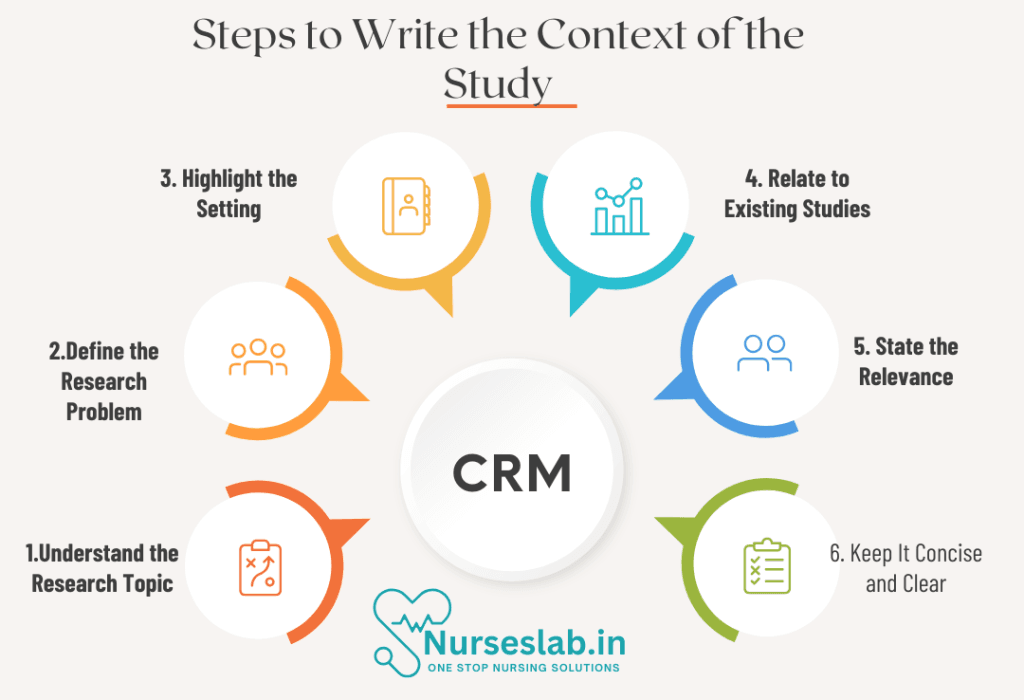
1. Understand the Research Topic
- Conduct a thorough literature review to understand the background and key issues.
- Identify knowledge gaps and contextual factors.
2. Define the Research Problem
- Clearly articulate the problem your study addresses.
- Explain its significance within the chosen context.
3. Highlight the Setting
- Provide details about the geographic, cultural, or demographic setting.
- Describe the environment in which the research takes place.
4. Relate to Existing Studies
- Reference relevant theories, frameworks, and prior research to situate your study academically.
5. State the Relevance
- Explain why the research is important and how it contributes to the field.
6. Keep It Concise and Clear
- Avoid unnecessary details while ensuring the context is comprehensive and accessible.
Example of the Context of the Study
Title: The Impact of Social Media on Mental Health Among Teenagers
Context of the Study:
“In recent years, the widespread adoption of social media has transformed how people communicate, connect, and consume information. While social media offers numerous benefits, such as fostering global connections and providing platforms for self-expression, concerns about its impact on mental health have grown significantly. Studies have highlighted a potential link between excessive social media use and issues such as anxiety, depression, and low self-esteem, particularly among teenagers who are among the most active users of these platforms.
This study focuses on high school students in urban areas of the United States, where social media penetration is exceptionally high. It aims to explore how different patterns of social media use influence teenagers’ mental health, building on previous research that has primarily focused on adults. By examining this relationship, the study seeks to provide insights that can inform interventions to promote healthier online habits and improve adolescent well-being.”
Tips for Writing an Effective Context of the Study
- Tailor to Your Audience: Write in a way that is accessible and engaging for your intended readers.
- Use Reliable Sources: Back up statements with credible data or references.
- Avoid Jargon: Use clear, straightforward language.
- Focus on Relevance: Only include details that directly relate to your research problem.
- Maintain a Logical Flow: Start with broad information and narrow down to specific details about your study.
The following are important things to identify as you look for context in research reports:
a. The report describes the larger purpose or need for the study.
The report provides a background on the topic, including relevant definitions, the context within which the study is conducted and a rationale for why the study was conducted.
It is important for you to understand why the study was conducted, what the study attempted to accomplish, why the research is important to the field and how the results could be used.
It is also important for you to know how this study fits into the larger body of research that has been conducted on this topic. If the study is the first study of its kind, that should be mentioned. Otherwise, look to see if the authors include references to studies previously published on the topic. This helps you understand how the study adds to or clarifies understanding of the topic.
b. The report explains the history of the study and/or theoretical frameworks, if appropriate.
Some studies in the field of online teaching and learning are repeated periodically. When this is the case, a report should include information, such as past participant rates, revisions to survey instruments or research protocols, or other changes to the study methodology since the previous findings were released.
Study reports may also include theoretical frameworks. Theories (or theoretical frameworks) associate a study with other studies done on a topic. These studies combined together (often called a body of research) can increase overall understanding of a topic and help you see where a study falls within a line of research. You should be able to understand the basic theoretical framework of a report without prior knowledge. If the study is based in theory, the theory can be described and it should be clear how the theory relates to the main focus of the study
c. The report includes the research aims or goals addressed by the study.
Research aims or goals are often included toward the beginning of the report after past research and theoretical frameworks have been explained. Research aims or goals (sometimes framed as questions) should be clearly identified in a report and can be written in a way that helps you understand what the study is investigating.
d. The report offers suggestions for further research.
It is not uncommon for one research study to illuminate the need for future studies. Look to see if the report suggests what research might need to be done next to further understand the topic. Unlike other context items (a, b and c), suggestions for further research are often included at the end of a report.
Common Mistakes to Avoid
- Being Too Vague: Provide specific information instead of broad, generic statements.
- Overloading with Details: Avoid including excessive historical or theoretical information unrelated to your study.
- Ignoring Existing Literature: Failing to reference prior studies can weaken the academic grounding of your research.
- Lack of Relevance: Ensure all included information directly supports your research objectives.
- Overemphasizing Practical Aspects: Balance practical implications with theoretical and academic significance.
REFERENCES
- Creswell, J. W. (2018). Research Design: Qualitative, Quantitative, and Mixed Methods Approaches. Sage Publications.
- Bryman, A. (2015). Social Research Methods. Oxford University Press.
- Maxwell, J. A. (2013). Qualitative Research Design: An Interactive Approach. Sage Publications.
- https://ecampus.oregonstate.edu/research/projects/report-reader/checklist/context/https://www.servicescape.com/blog/tips-for-writing-an-effective-background-of-the-study
- Aadam Mae, Scope of the Study: How to Write It (+ Examples), June 19th, 2026, https://www.researchprospect.com/scope-of-the-study/
Stories are the threads that bind us; through them, we understand each other, grow, and heal.
JOHN NOORD
Connect with “Nurses Lab Editorial Team”
I hope you found this information helpful. Do you have any questions or comments? Kindly write in comments section. Subscribe the Blog with your email so you can stay updated on upcoming events and the latest articles.


