


Last Updated on July 10, 2026 by Nurseslab.in Editorial Team
A prostate exam checks the prostate gland for enlargement, abnormalities, or signs of cancer, helping diagnose urinary symptoms and support early detection in men’s health.
Introduction
The prostate gland is a crucial component of the male reproductive system, responsible for producing seminal fluid that nourishes and transports sperm. Located just below the bladder and in front of the rectum, its health is vital—particularly as men age, since conditions such as benign prostatic hyperplasia (BPH), prostatitis, and prostate cancer become increasingly prevalent. The prostate exam is a cornerstone of urological assessment, enabling early detection and management of various disorders.
Purpose and Importance of Prostate Examination
The primary goal of a prostate examination is to detect abnormalities in the prostate gland. This includes screening for cancer, identifying enlargement due to benign causes, and diagnosing infections or inflammation. Early detection of prostate issues can significantly improve treatment outcomes, particularly for prostate cancer, which is one of the most common cancers among men in India. Regular prostate screening is recommended for men over the age of 50, or earlier for those with a family history of prostate cancer or other risk factors.
Types of Prostate Exam Diagnostic Procedures
The prostate exam comprises several diagnostic modalities, each with its own indications and methodologies. The principal types include:
- Digital Rectal Examination (DRE)
- Prostate-Specific Antigen (PSA) Blood Test
- Transrectal Ultrasound (TRUS)
- Prostate Biopsy
- Advanced Imaging (MRI, CT Scan)
Digital Rectal Examination (DRE)
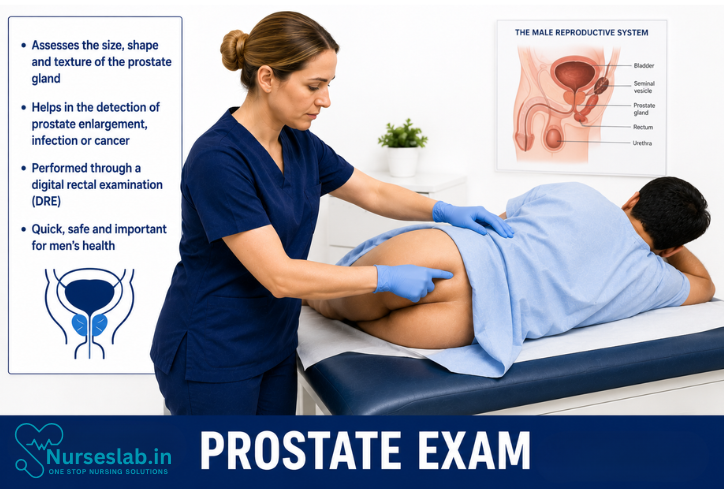
The DRE is the most basic and widely used method for initial prostate assessment. It is a physical examination where the clinician inserts a lubricated, gloved finger into the patient’s rectum to palpate the posterior surface of the prostate gland.
Preparation
- The patient should be informed about the procedure and its purpose to reduce anxiety.
- No special dietary restrictions are required, but the patient may be asked to empty the bowels beforehand for comfort.
- Privacy and dignity must be ensured, with a chaperone present if requested.
Procedure
- The patient is positioned in the left lateral (Sim’s) position or standing, leaning forward over the examination table.
- The examiner dons gloves, applies lubricant to the index finger, and gently inserts it into the rectum.
- Palpation is performed to assess the size, shape, and consistency of the prostate. The normal prostate is smooth, firm, and symmetrical.
- Any nodules, indurations, asymmetry, or tenderness are noted.
Interpretation
- A smooth, firm prostate suggests normalcy or benign prostatic hyperplasia.
- Hard, irregular, or nodular areas may indicate malignancy.
- Tenderness could suggest prostatitis.
Prostate-Specific Antigen (PSA) Blood Test
PSA is a protein produced by prostate cells, and its levels in the blood can be elevated in various prostate conditions, including cancer, BPH, and infection. The PSA test is a sensitive but not highly specific marker, thus interpreted alongside clinical findings.
Preparation
- The patient should avoid ejaculation and vigorous exercise for 24–48 hours prior to the test, as these can temporarily raise PSA levels.
- Inform the clinician about any medications, especially 5-alpha reductase inhibitors, which can lower PSA.
Procedure
- Venous blood is drawn, typically from the antecubital vein.
- The sample is sent to the laboratory for PSA quantification.
Interpretation
- Normal PSA levels are usually below 4 ng/mL, but age-specific reference ranges may be considered.
- Elevated PSA can indicate cancer, BPH, or prostatitis. Further investigation is warranted if PSA is raised.
- PSA velocity (change over time) and PSA density (PSA/prostate volume) provide additional diagnostic value.
Transrectal Ultrasound (TRUS)
TRUS uses high-frequency sound waves to produce images of the prostate gland, helping in the assessment of size, shape, and the presence of suspicious lesions. It is often used in conjunction with biopsies.
Preparation
- The patient may be advised to use an enema before the procedure to clear the rectum.
- Inform about any bleeding disorders or use of anticoagulants.
Procedure
- The patient lies on their side with knees bent.
- A lubricated ultrasound probe is gently inserted into the rectum.
- Real-time images are obtained, and measurements of the prostate are taken.
- Suspicious areas are noted for potential biopsy.
Interpretation
- Homogeneous, symmetrical prostate indicates normalcy or benign conditions.
- Hypoechoic (dark) lesions, asymmetry, or irregular borders may suggest malignancy.
- TRUS can also help measure prostate volume and guide needle placement for biopsy.
Prostate Biopsy
A prostate biopsy is performed to obtain tissue samples for histopathological examination when cancer is suspected due to abnormal DRE, elevated PSA, or suspicious TRUS findings.
Preparation
- Antibiotic prophylaxis is typically administered to prevent infection.
- Patients may be advised to discontinue anticoagulants temporarily, under medical supervision.
- An enema may be recommended to cleanse the rectum.
Procedure
- TRUS-guided biopsy is most common: under ultrasound guidance, a needle is inserted through the rectal wall into the prostate.
- Multiple core samples (usually 10–12) are taken from different regions of the prostate.
- The procedure takes 20–30 minutes and is usually performed under local anaesthesia.
Interpretation
- Tissue samples are examined for cancerous cells, graded using the Gleason score.
- The presence, extent, and aggressiveness of cancer are determined, guiding further management.
- Negative biopsy does not rule out cancer; repeat biopsy may be considered if suspicion remains high.
Advanced Imaging: MRI and CT Scan
Magnetic Resonance Imaging (MRI) and Computed Tomography (CT) scans provide detailed visualisation of prostate anatomy and can detect local invasion, lymph node involvement, and distant metastases. MRI is particularly valuable in active surveillance and surgical planning.
Preparation
- For MRI, patients must remove all metallic objects and inform the technician of any implants.
- CT scans may require oral or intravenous contrast agents; check for allergies.
Procedure
- Imaging is performed according to standard protocols, with the patient lying still.
- MRI uses strong magnetic fields and radio waves, while CT uses X-rays.
- Images are analysed by radiologists for tumour localisation, staging, and planning interventions.
Interpretation
- MRI can distinguish between indolent and aggressive tumours, assess extracapsular extension, and guide targeted biopsies.
- CT is less sensitive for prostate cancer but useful for evaluating metastatic spread.
Preparation and Patient Counselling
Preparation for prostate diagnostic procedures involves not only physical readiness but psychological comfort. Clinicians should explain the rationale, steps, risks, and benefits of each procedure in clear, culturally sensitive language. In India, where stigma and embarrassment regarding genitourinary issues may be higher, respectful communication is essential. Patients should be encouraged to ask questions and express concerns.
Risks and Complications
While most prostate exams are safe, certain risks exist:
- DRE: Minimal risk, but may cause mild discomfort or embarrassment.
- PSA Test: Blood draw risks include minor bruising or infection.
- TRUS: Rarely, rectal bleeding or discomfort.
- Biopsy: Infection, bleeding, pain, and rarely, urinary retention. Antibiotic prophylaxis and aseptic technique minimise these risks.
- Imaging: MRI is generally safe; CT scan involves radiation exposure and potential contrast reactions.
Interpretation and Follow-Up
Interpretation of prostate exams must be holistic, considering clinical history, examination findings, laboratory results, and imaging studies. False positives and negatives can occur, particularly with PSA and DRE. Suspicious findings warrant further investigation, and confirmed diagnoses should lead to appropriate referral and management.
Follow-up may include repeat testing, specialist consultation (urologist or oncologist), and discussion of treatment options such as medication, surgery, radiotherapy, or active surveillance.
Nursing Care for Patients Undergoing Prostate Examination
Nurses play a central role in ensuring that patients receive thorough, compassionate, and culturally sensitive care throughout the examination process.
Pre-Examination Nursing Responsibilities
Patient Assessment
Thorough patient assessment is the foundation of effective nursing care. Begin by reviewing the patient’s medical, surgical, and family history, with particular attention to urinary symptoms, prior prostate issues, and risk factors for prostate cancer. Enquire about symptoms such as difficulty in urination, nocturia, haematuria, or pain. Document any comorbidities (e.g., diabetes, hypertension) and current medications that may influence the procedure or recovery.
Assess the patient’s understanding of the prostate examination and address any misconceptions. Some patients may have limited awareness or hold cultural beliefs that affect their perception of the procedure. Use simple language and empathetic communication to clarify the purpose and benefits of the examination.
Effective Communication
Establish a trusting relationship by introducing yourself and explaining your role. Encourage the patient to express concerns and ask questions. If language barriers exist, seek support from translators or use regional languages to ensure the patient fully understands the process. Respect privacy and maintain confidentiality at all times.
Risk Factor Identification
Identify risk factors such as age above 50, family history of prostate cancer, previous prostate conditions, and lifestyle factors (e.g., smoking, high-fat diet). Educate the patient about the importance of regular screening and early detection.
Patient Preparation
Physical Preparation
Ensure the patient is physically prepared for the examination. Advise the patient to empty their bladder prior to the procedure for comfort. Confirm that the patient has followed any pre-examination instructions provided by the physician, such as fasting if a blood sample is required for the PSA test.
Prepare the examination area by ensuring cleanliness, adequate lighting, and the availability of necessary supplies such as gloves, lubricant, and disposable sheets. Adhere strictly to infection control protocols, including hand hygiene and the use of personal protective equipment.
Psychological Preparation
Prostate examinations can cause anxiety or embarrassment, especially in the Indian cultural setting where discussions about intimate health may be considered sensitive. Provide reassurance, explain each step of the procedure calmly, and stress that the examination is a routine part of men’s health care. Use non-judgmental language and maintain a supportive attitude.
Obtaining Informed Consent
Explain the procedure, its purpose, potential risks, and benefits in clear, understandable terms. Obtain written informed consent, ensuring the patient has ample opportunity to ask questions and voice concerns. Involve family members if appropriate, while respecting the patient’s privacy and autonomy.
Addressing Anxieties
Listen attentively to any anxieties or fears expressed by the patient. Address common concerns, such as pain, discomfort, or stigma associated with prostate exams. Offer information about pain management and emphasise the brief duration of the procedure. Reiterate the importance of early detection for effective treatment.
Assisting During the Procedure
Nurse’s Role in Supporting the Patient
During the examination, the nurse’s primary responsibility is to assist the healthcare provider and advocate for the patient’s comfort and dignity. Position the patient appropriately, usually in the left lateral (Sims’) position, ensuring adequate exposure while maintaining privacy through the use of drapes or screens.
Provide verbal reassurance throughout the procedure, describing each step before it occurs. Monitor the patient’s reactions, and be prepared to intervene if they experience discomfort, pain, or distress.
Maintaining Comfort and Dignity
Preserve the patient’s dignity by minimising unnecessary exposure and maintaining a respectful environment. Use gentle, confident movements when assisting with positioning or handling equipment. Avoid hurried or abrupt actions that may increase anxiety.
Infection Control
Adhere to strict aseptic techniques throughout the examination. Ensure that all instruments and gloves are sterile, and dispose of used materials promptly in accordance with hospital protocols. Educate the patient about the importance of infection control in preventing complications.
Immediate Response to Complications
Be vigilant for signs of adverse reactions such as pain, bleeding, or vasovagal responses (e.g., fainting, sweating). Provide immediate support and alert the physician if complications arise. Document any incidents thoroughly and ensure the patient receives appropriate follow-up care.
Post-Examination Care
Monitoring for Complications
After the procedure, monitor the patient for any signs of bleeding, infection, or urinary difficulties. Assess vital signs and observe for symptoms such as pain, discomfort, or dizziness. Provide prompt intervention if complications develop and communicate with the healthcare team as needed.
Providing Instructions
Offer clear post-examination instructions, including guidance on resuming normal activities, signs of complications to watch for, and when to seek medical attention. Advise the patient to report any persistent pain, fever, or unusual symptoms immediately.
Emotional Support
Recognise that some patients may feel vulnerable or anxious following a prostate examination. Offer empathetic support, encourage open discussion of feelings, and validate the patient’s experience. Provide access to counselling or support groups if available.
Patient Education
Explaining Results
Once results are available, ensure that the patient receives a clear, understandable explanation. Avoid medical jargon and use simple language to describe findings and their implications. If further investigations or treatments are needed, explain the next steps and address any questions.
Follow-Up Care
Educate the patient about the importance of follow-up appointments to monitor prostate health. Provide information about additional tests, treatments, or referrals as recommended by the physician. Encourage adherence to medical advice and emphasise the role of regular screening in early detection.
Lifestyle Advice
Promote healthy lifestyle choices that support prostate health, such as a balanced diet rich in fruits and vegetables, regular physical activity, and avoidance of tobacco and excessive alcohol. Discuss the benefits of weight management and stress reduction. Tailor advice to the patient’s individual needs and cultural context.
Promoting Awareness
Encourage patients and their families to become proactive about men’s health issues. Share information about community resources, educational programmes, and health camps. Advocate for increased awareness and destigmatisation of prostate health in the wider community.
Culturally Sensitive Communication
Addressing Stigma and Beliefs
In India, cultural beliefs and stigma may influence patients’ willingness to undergo prostate examinations. Approach sensitive topics with respect and empathy, acknowledging the patient’s beliefs and concerns. Avoid judgemental language and provide reassurance that the procedure is a standard, safe practice.
Respecting Patient Preferences
Be mindful of cultural norms related to modesty, gender dynamics, and family involvement. Offer the option of having a chaperone or family member present during the examination if preferred. Respect religious or cultural preferences regarding physical contact and privacy.
Effective Dialogue
Use culturally appropriate language and expressions when discussing prostate health. Employ active listening and respond thoughtfully to questions or concerns. If possible, provide educational materials in the patient’s preferred language or dialect.
Conclusion
Nurses hold a crucial position in supporting patients through prostate examinations, ensuring that care is comprehensive, compassionate, and culturally sensitive. By adhering to best practices in assessment, preparation, procedure assistance, post-examination care, education, and communication, nursing professionals can empower patients to take charge of their prostate health. Advocacy, empathy, and patient-centred care remain the cornerstones of effective nursing practice in the Indian healthcare context.
REFERENCES
- Cavallari P, Bolzoni F, Esposti R, Bruttini C. Cough-anal reflex may be the expression of a pre-programmed postural action. Front Hum Neurosci. 2017;11:475. doi:10.3389/fnhum.2017.00475
- American Cancer Society. Screening Tests for Prostate Cancer https://www.cancer.org/cancer/prostate-cancer/detection-diagnosis-staging/tests.html.
- Cancer.Net. Prostate Cancer: Screening (https://www.cancer.net/cancer-types/prostate-cancer/screening).
- Luginbuehl H, Baeyens JP, Kuhn A, et al. Pelvic floor muscle reflex activity during coughing – an exploratory and reliability study. Ann Phys Rehabil Med. 2016;59(5-6):302-307. doi:10.1016/j.rehab.2016.04.005
- National Cancer Institute. Prostate Cancer Screening (PDQ®) Health Professional Version (https://www.cancer.gov/types/prostate/hp/prostate-treatment-pdq).
- Prostate Cancer Foundation. Prostate Exam (https://www.pcf.org/about-prostate-cancer/what-is-prostate-cancer/prostate-exam/).
Stories are the threads that bind us; through them, we understand each other, grow, and heal.
JOHN NOORD
Connect with “Nurses Lab Editorial Team”
I hope you found this information helpful. Do you have any questions or comments? Kindly write in comments section. Subscribe the Blog with your email so you can stay updated on upcoming events and the latest articles.


