


Last Updated on July 10, 2026 by Nurseslab.in Editorial Team
Quantitative Sudomotor Axon Reflex Test (QSART) evaluates autonomic nerve function by measuring sweat gland activity, helping diagnose small‑fiber neuropathy and other autonomic disorders.
Introduction
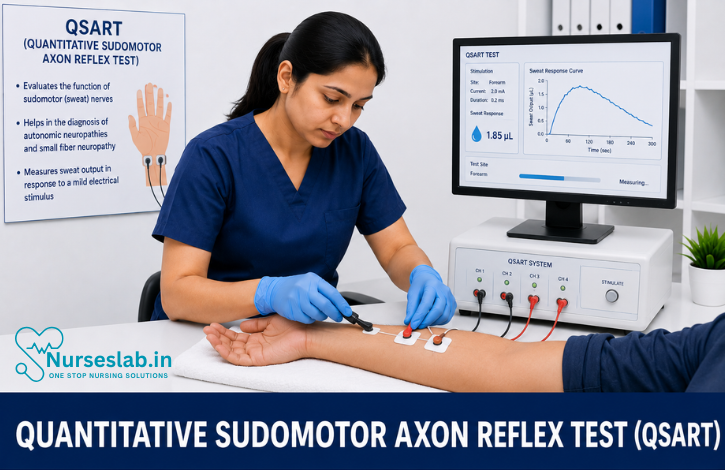
The Quantitative Sudomotor Axon Reflex Test (QSART) is a specialised diagnostic procedure used to evaluate the integrity of the postganglionic sympathetic sudomotor fibres. Since its introduction in the late twentieth century, QSART has become an essential tool in the assessment of autonomic nervous system function, particularly in disorders affecting small nerve fibres.
Historical Background and Significance in Autonomic Testing
QSART was first described in the 1980s as part of a broader effort to quantify autonomic dysfunction, especially in the context of peripheral neuropathies. Before QSART, assessment of sudomotor function relied on less objective measures, such as the Thermoregulatory Sweat Test (TST) and simple clinical observation. The development of QSART represented a significant advance, providing a reproducible, quantitative measure of sweat production in response to a controlled stimulus. This has allowed clinicians to better diagnose and monitor autonomic disorders, improving patient outcomes and guiding management strategies.
Physiological Basis of QSART
Anatomy and Physiology of Sudomotor Function
Sudomotor function refers to the ability of the autonomic nervous system, specifically the sympathetic branch, to regulate sweating. Sweat glands are innervated by small, unmyelinated postganglionic sympathetic fibres known as C fibres. These fibres originate in the sympathetic ganglia and travel to the skin, where they terminate at the eccrine sweat glands. The release of acetylcholine at the nerve terminals stimulates the glands to produce sweat, which plays a crucial role in thermoregulation and skin hydration.
Role of Small Nerve Fibres
Small fibre neuropathies primarily affect the unmyelinated C fibres and thinly myelinated A-delta fibres, leading to a variety of symptoms, including autonomic dysfunction. Because these fibres are responsible for sudomotor activity, QSART is uniquely suited to detect abnormalities in their function. Damage to these fibres can result in reduced or absent sweating, which may be localised or generalised depending on the underlying pathology.
Principles of QSART
Mechanism of the Axon Reflex
QSART is based on the axon reflex mechanism. When a stimulus such as acetylcholine is applied to the skin via iontophoresis, it activates the postganglionic sympathetic fibres in the region. The action potentials travel antidromically (backwards) along branches of the nerve, stimulating adjacent sweat glands that are not directly under the stimulus. This results in a measurable increase in local sweat production, which is proportional to the integrity and function of the sudomotor fibres.
Measurement of Sudomotor Function
The test quantifies the volume of sweat produced in response to a controlled chemical stimulus. By measuring the latency, amplitude, and duration of the sweat response, QSART provides detailed information about the function of the postganglionic sympathetic fibres. The results can help differentiate between preganglionic and postganglionic lesions and identify patterns consistent with specific neuropathies.
Methodology
Step-by-Step Procedure
- Patient Preparation: The patient is advised to avoid caffeine, nicotine, and certain medications that may affect autonomic function for at least 24 hours prior to testing. The skin is cleaned and allowed to acclimatise to room temperature.
- Electrode Placement: Specialised QSART electrodes are placed on standard sites, typically the forearm, proximal leg, distal leg, and foot. These locations allow for assessment of regional sudomotor function.
- Iontophoresis of Acetylcholine: A 10% acetylcholine solution is delivered to the skin via iontophoresis, using a small electrical current to drive the chemical into the tissue.
- Sweat Measurement: The electrodes contain hygrometric sensors that continuously measure the volume of sweat produced over a set period, usually 5-10 minutes.
- Data Recording and Analysis: The data are recorded and analysed using dedicated software, which calculates the latency, peak sweat output, and recovery time at each site.
Equipment Used
QSART requires a specialised device comprising iontophoresis electrodes, hygrometric sensors, and a computer interface for data acquisition and analysis. The system must be calibrated before each test to ensure accuracy. The test is typically performed in a controlled environment, with ambient temperature and humidity monitored to reduce variability.
Patient Preparation and Safety Considerations
Patients should be informed about the procedure, including the mild tingling sensation associated with iontophoresis. Contraindications include skin infections, open wounds at electrode sites, and known allergies to acetylcholine. The test is generally safe, with minimal discomfort and negligible risk of adverse effects.
Clinical Applications
Indications for QSART
QSART is indicated in the evaluation of autonomic disorders, particularly those affecting small fibre function. Common indications include:
- Suspected small fibre neuropathy (e.g., diabetic neuropathy, amyloidosis)
- Autonomic failure syndromes (e.g., pure autonomic failure, multiple system atrophy)
- Peripheral neuropathies with autonomic involvement
- Distinguishing preganglionic from postganglionic lesions
- Assessment of regional sudomotor impairment
Conditions Assessed
QSART is valuable in the diagnosis and monitoring of several conditions:
- Diabetic Neuropathy: Early involvement of small fibres can be detected using QSART, aiding in timely intervention.
- Amyloid Neuropathy: Characterised by patchy loss of sudomotor function, which can be localised using QSART.
- Idiopathic Small Fibre Neuropathy: QSART helps confirm the diagnosis when other tests are inconclusive.
- Autonomic Neuropathies: Disorders such as multiple system atrophy and pure autonomic failure often present with widespread sudomotor impairment.
- Chronic Regional Pain Syndrome: Regional changes in sweating can be quantified and monitored.
Integration with Other Autonomic Tests
QSART is often used alongside other autonomic tests, such as the Thermoregulatory Sweat Test (TST), Heart Rate Variability (HRV) analysis, and tilt-table testing. This comprehensive approach allows for a more accurate assessment of the autonomic nervous system, helping to localise lesions and differentiate between central and peripheral causes of dysfunction.
Interpretation of Results
Normal vs Abnormal Findings
In healthy individuals, QSART demonstrates a rapid onset of sweating at all tested sites, with peak output occurring within several minutes. Latency, amplitude, and recovery time are within established reference ranges, which may vary depending on age, sex, and environmental factors.
Abnormal results may include:
- Absent or markedly reduced sweat response at one or more sites, indicating postganglionic fibre dysfunction
- Delayed onset or reduced amplitude, suggestive of partial fibre impairment
- Regional patterns of dysfunction, aiding localisation of pathology
Factors Affecting Results
Several factors can influence QSART outcomes, including:
- Ambient temperature and humidity
- Medications affecting autonomic function (e.g., anticholinergics, beta-blockers)
- Skin conditions at electrode sites
- Patient anxiety or discomfort
Strict adherence to protocol and standardisation of environmental conditions are essential for reliable results.
Clinical Relevance
QSART findings must be interpreted in the context of clinical presentation and other test results. Isolated abnormalities may be seen in focal neuropathies, while widespread impairment suggests generalised autonomic dysfunction. The test can guide further investigations, inform prognosis, and monitor response to therapy.
Advantages and Limitations
Strengths of QSART
QSART offers several advantages over alternative methods:
- Quantitative and Objective: Provides reproducible, numerical data on sweat production
- Regional Assessment: Multiple sites can be tested, allowing for localisation of dysfunction
- Non-invasive: Minimal discomfort and risk to the patient
- Specificity for Postganglionic Dysfunction: Differentiates between preganglionic and postganglionic lesions
Technical Challenges and Limitations
Despite its strengths, QSART is not without limitations:
- Technically Demanding: Requires specialised equipment and trained personnel
- Environmental Sensitivity: Results can be affected by temperature, humidity, and patient factors
- Limited Availability: Not widely available in all clinical settings, particularly in resource-limited environments
- Interpretation Complexity: Results must be interpreted in the context of other clinical and laboratory findings
- Contraindications: Cannot be performed in patients with certain skin conditions or allergies
Comparison with Alternative Tests
Other tests for sudomotor function include the Thermoregulatory Sweat Test (TST), Sympathetic Skin Response (SSR), and skin biopsy for intraepidermal nerve fibre density. While TST assesses global sweat production, QSART offers regional specificity and quantitative data. SSR is less sensitive for small fibre dysfunction, and skin biopsy, although definitive, is invasive and not suitable for serial monitoring.
Nursing Care of Patients Undergoing Quantitative Sudomotor Axon Reflex Test (QSART)
The nurse’s involvement spans the entire procedure, ensuring patient safety, comfort, and the reliability of test outcomes. This will provides an extensive guideline for nursing management before, during, and after the QSART procedure, tailored to meet the standards of clinical practice and international best practices.
Pre-Test Nursing Care
Patient Identification and Initial Assessment
Prior to initiating the QSART procedure, nurses must adhere to stringent protocols for patient identification. Use at least two distinct identifiers, such as the patient’s full name and hospital registration number, to confirm identity and prevent errors. Conduct a comprehensive assessment of the patient’s medical and surgical history, with particular attention to conditions affecting autonomic function, including diabetes mellitus, autoimmune disorders, or peripheral neuropathies. Additionally, review any known allergies, especially those to acetylcholine or adhesives used with electrodes, as these may necessitate modifications to the procedure or require special precautions.
Assess the patient’s current medication regimen, with focus on drugs that may interfere with autonomic testing. These include anticholinergics, antidepressants, beta-blockers, and other agents that could impact the accuracy of test results. Document all findings meticulously in the patient’s medical record to facilitate coordinated care and communication with the multidisciplinary team.
Patient Education and Informed Consent
Ensuring patient understanding is paramount. Nurses should explain the QSART procedure in simple, clear language, detailing its purpose, the steps involved, and what sensations or experiences the patient may encounter. Emphasise that the test involves mild tingling due to iontophoresis but is generally well-tolerated. Address any concerns or anxieties the patient may have, and encourage questions to foster a sense of involvement and comfort.
In accordance with hospital protocols and the ethical standards of care in India, obtain informed consent prior to the procedure. Provide written information leaflets, if available, to supplement verbal instructions. Confirm that the patient comprehends the necessity of remaining still during sweat measurement and the importance of following pre-test instructions for optimal results.
Physical Preparation of the Patient
Advise the patient to refrain from applying lotions, creams, powders, or any topical substances on the skin for at least 24 hours before the test, as these can interfere with electrode adhesion and sweat output measurement. Instruct the patient to bathe with plain soap and water the evening before or on the morning of the test, ensuring the skin is clean and free from residues. Request the patient to wear loose, comfortable clothing to facilitate access to test sites, which are commonly the forearm, leg, and foot.
If the patient has a history of excessive sweating or dermatological conditions, these should be assessed and documented as they may affect test outcomes. Additionally, ensure the patient has abstained from caffeine, nicotine, and alcohol for at least 12 hours before the procedure, as these substances can alter autonomic function and confound test results. Remind the patient to avoid strenuous exercise for 24 hours prior to the test.
Nursing Care During the QSART Procedure
Preparation of Equipment and Environment
Prior to commencing the procedure, nurses should verify the functionality and calibration of the QSART equipment. Ensure that all necessary supplies are available, including electrodes, acetylcholine solution, adhesive tapes, and sterile gauze. Prepare the testing room to provide a quiet, temperature-controlled, and comfortable environment, as ambient temperature and noise can affect both patient comfort and the accuracy of sweat measurements.
Arrange the patient in a supine or semi-recumbent position, depending on the anatomical sites to be tested. Expose the appropriate skin areas while maintaining patient privacy and dignity by using drapes or sheets as needed.
Skin Preparation and Electrode Placement
Cleanse the designated skin sites with alcohol swabs and allow them to air dry completely to ensure optimal electrode adhesion and minimise artefacts. Inspect the skin for any lesions, rashes, or infections; if present, notify the physician and select alternative sites if necessary. Apply the electrodes in accordance with the manufacturer’s instructions and hospital protocol, ensuring firm contact with the skin to prevent leakage of the acetylcholine solution and ensure reliable readings.
Monitoring and Patient Support
Continuously observe the patient for any signs of discomfort, anxiety, or adverse reactions such as burning, itching, or erythema at electrode sites. Reassure the patient throughout the procedure, reiterating that mild tingling or warmth is expected but should not be painful. If the patient experiences significant discomfort or an allergic reaction, pause the procedure and inform the physician immediately.
Monitor vital signs—pulse, blood pressure, respiratory rate—at baseline and intermittently during the test, especially in patients with known autonomic dysfunction or cardiovascular comorbidities. Maintain clear communication, providing ongoing explanations about each step to reduce anxiety and promote cooperation.
Documentation During the Procedure
Record the start and end times of the test, sites tested, and any deviations from standard protocol. Note any patient-reported symptoms or observations made during the procedure, including skin reactions or equipment issues. This facilitates accurate interpretation of results and ensures a comprehensive record for future reference.
Post-Test Nursing Care
Immediate Post-Procedural Care
Once the test is completed, gently remove the electrodes and cleanse the skin with sterile saline or water to remove any residual acetylcholine or adhesive. Inspect the skin for any signs of irritation, blisters, or allergic reactions; apply a soothing lotion if required and as per hospital policy. Advise the patient to report any delayed skin reactions occurring after discharge.
Assist the patient to a comfortable position, allowing rest if they feel fatigued or light-headed. Offer water or a light snack if fasting was required for the procedure. Reassess vital signs and compare with pre-test baseline values, documenting any significant changes and informing the physician if abnormalities are detected.
Patient Education and Discharge Instructions
Educate the patient regarding the expected post-test experience, including the possibility of mild localised skin redness or tingling that should resolve within a few hours. Advise avoidance of harsh soaps or vigorous scrubbing at electrode sites for the remainder of the day. Provide contact information and clear instructions on when to seek medical attention—such as persistent pain, swelling, or signs of infection at the test sites.
Explain the anticipated timeline for test results and the follow-up process. Encourage the patient to continue regular medications unless otherwise directed by the physician, and to maintain a record of any new symptoms for discussion at the next appointment.
Documentation and Quality Assurance
Comprehensive documentation is essential for legal, ethical, and clinical reasons. Record all aspects of nursing care, from initial assessment and patient education to intra-procedural monitoring and post-test observations. Participate in regular training and competency assessments related to autonomic testing to maintain high standards of care and patient safety.
Contribute to quality improvement initiatives by reporting any adverse events, equipment failures, or procedural challenges. Engage in multidisciplinary discussions to refine protocols and ensure alignment with evolving best practices, both nationally and internationally.
REFERENCES
- Low, P. A. (2014). Quantitative Sudomotor Axon Reflex Test (QSART). In Encyclopedia of the Neurological Sciences (pp. 1023-1024). Elsevier Inc.. https://doi.org/10.1016/B978-0-12-385157-4.00510-8
- Freeman R, Chapleau MW. Testing the autonomic nervous system (https://pubmed.ncbi.nlm.nih.gov/23931777/). Handb Clin Neurol. 2013 Aug;115:115-36.
- Illigens BMW, Gibbons CH. Autonomic testing, methods and techniques (https://pubmed.ncbi.nlm.nih.gov/31277866/). Handb Clin Neurol. 2019 Jul;160:419-433.
- National Library of Medicine (U.K.). Autonomic Testing https://medlineplus.gov/lab-tests/autonomic-testing/ . Last updated 9/21/2021.
- Novak P. Quantitative Autonomic Testing (https://pubmed.ncbi.nlm.nih.gov/21788940/). J Vis Exp. 2011 Jul;(53):2502.
Stories are the threads that bind us; through them, we understand each other, grow, and heal.
JOHN NOORD
Connect with “Nurses Lab Editorial Team”
I hope you found this information helpful. Do you have any questions or comments? Kindly write in comments section. Subscribe the Blog with your email so you can stay updated on upcoming events and the latest articles.


