


Last Updated on May 26, 2026 by Nurseslab.in Editorial Team
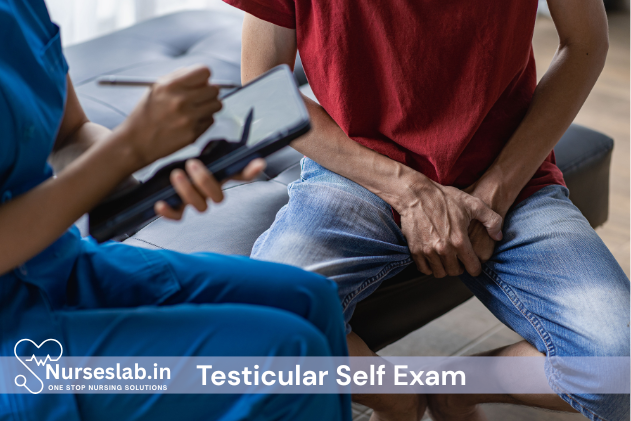
A testicular self‑exam (TSE) is a simple monthly check men can perform to detect lumps, swelling, or changes that may indicate testicular cancer or other conditions. It promotes early detection, awareness, and proactive men’s health care.
Introduction
Testicular health is a vital but often overlooked aspect of men’s wellbeing. Testicular cancer, although relatively rare compared to other cancers, is the most common malignancy in males aged 15 to 35 years. Early detection dramatically increases the chances of successful treatment and survival. One of the most effective early diagnostic tools is the Testicular Self-Exam (TSE), a simple, non-invasive procedure that men can perform at home to monitor their testicular health.
The Importance of Testicular Self-Examination
Testicular cancer often presents as a painless lump or swelling in the testis. Because the symptoms are subtle and may be ignored, regular self-examination is crucial for early detection. Additionally, TSE helps in identifying other non-cancerous conditions such as varicoceles, hydroceles, and infections, which can affect fertility and overall health.
Key reasons for performing TSE include:
- Early Detection: Most testicular cancers are highly treatable if caught early. Regular TSE increases the likelihood of noticing changes at an early stage.
- Familiarity with Normal Anatomy: Regular self-examination helps individuals become familiar with the normal size, shape, and consistency of their testicles, making it easier to detect abnormalities.
- Empowerment and Awareness: Performing TSE encourages men to take an active role in their health and promotes awareness about testicular health issues.
- Cost-Effective: TSE is free and does not require specialised equipment or frequent doctor visits, making it accessible to all.
When and How Often to Perform TSE
Medical professionals recommend performing TSE once a month, preferably after a warm bath or shower. The heat relaxes the scrotal skin, making it easier to feel the underlying structures. Adolescents and adult men, especially those with a family history of testicular cancer or other risk factors (such as undescended testicles), should be particularly diligent about regular self-exams.
Step-by-Step Procedure for Testicular Self-Examination
The TSE procedure is straightforward and can be completed in a few minutes. The following detailed steps ensure thoroughness and accuracy:
- Preparation:
- Perform the examination after a warm bath or shower to ensure the scrotum is relaxed.
- Stand in front of a mirror. Check for any visible swelling or changes in the scrotal skin.
- Examination of Each Testicle:
- Hold the scrotum gently in the palm of your hands, using both hands to support the testicles.
- Examine one testicle at a time.
- Place your index and middle fingers underneath the testicle and your thumbs on top.
- Gently roll the testicle between your fingers and thumbs, feeling for any lumps, bumps, or changes in texture.
- Locating the Epididymis:
- Identify the soft, coiled tube (epididymis) located at the back and top of each testicle. This is a normal structure and should not be mistaken for an abnormal lump.
- Checking for Abnormalities:
- Feel for any hard lumps, smooth or rounded bumps, or unusual swelling.
- Note any changes in size, shape, or consistency compared to previous exams.
- Repeat the process with the other testicle.
- Observation of the Scrotal Skin and Spermatic Cord:
- Check the skin for any unusual thickening, colour changes, or sores.
- Gently feel along the spermatic cord for any irregularities.
Throughout the examination, it is important to use gentle pressure. Avoid squeezing or pinching, as this can cause discomfort and make it harder to detect subtle changes.
What to Look for During TSE
The goal of TSE is to identify any abnormalities that may indicate an underlying condition. Common findings include:
- Lumps or Nodules: Any firm, painless lump on the testicle should be evaluated by a doctor as soon as possible.
- Swelling or Enlargement: An overall increase in testicular size may indicate inflammation, infection, or tumour.
- Changes in Consistency: Hardening or softening of the testicle compared to the other side or previous exams.
- Pain or Discomfort: While most testicular cancers are painless, any persistent pain, heaviness, or discomfort warrants medical attention.
- Changes in Scrotal Skin: Redness, thickening, or sores may indicate infection or other dermatological conditions.
Common Findings and Their Possible Significance
Not all abnormalities are cancerous. Some benign conditions commonly detected during TSE include:
- Epididymal Cyst (Spermatocele): A painless, fluid-filled swelling in the epididymis, generally harmless.
- Varicocele: Enlarged veins in the scrotum, often described as feeling like a “bag of worms.” May cause discomfort or fertility issues but is not cancerous.
- Hydrocele: Accumulation of fluid around the testicle, leading to swelling. Usually painless and benign.
- Orchitis/Epididymitis: Inflammation of the testicle or epididymis, often due to infection, causing pain and swelling.
- Testicular Torsion: A medical emergency where the spermatic cord twists, cutting off blood supply. Presents with sudden, severe pain and requires immediate attention.
Distinguishing between benign and serious conditions can be challenging, which is why any new or unusual finding should prompt a consultation with a healthcare professional.
Risk Factors for Testicular Cancer
Awareness of individual risk factors can further guide the need for regular self-examination. Risk factors include:
- Family history of testicular cancer
- History of undescended testicle (cryptorchidism)
- Previous testicular cancer
- Abnormal testicular development
- HIV infection
- Age (most common between 15-35 years)
- Ethnicity (higher incidence in Caucasian males)
Men with one or more risk factors should be particularly vigilant and may benefit from more frequent self-exams and professional evaluations.
What to Do If You find an Abnormality
Discovering a lump or other abnormality can be alarming, but it is important to remain calm. Most testicular lumps are not cancerous. However, prompt medical evaluation is crucial to determine the cause and initiate appropriate treatment if necessary.
Steps to follow if you detect an abnormality:
- Do not panic. Avoid excessive handling of the area, which may cause irritation or swelling.
- Schedule an appointment with a general physician or urologist as soon as possible. Clearly describe the changes you have noticed.
- Prepare for the consultation by noting the duration, size, location, and any associated symptoms (pain, fever, etc.).
- Follow through with recommended diagnostic tests, such as ultrasound or blood tests, as advised by the doctor.
Early evaluation ensures timely intervention and peace of mind.
Professional Diagnostic Procedures Following TSE
If a healthcare provider suspects an abnormality, further diagnostic steps may include:
- Scrotal Ultrasound: A non-invasive imaging test that uses sound waves to differentiate between solid and fluid-filled masses.
- Blood Tests: Measurement of tumour markers such as alpha-fetoprotein (AFP), beta-human chorionic gonadotropin (β-hCG), and lactate dehydrogenase (LDH).
- Physical Examination: Performed by a doctor to assess the nature and extent of the abnormality.
- Biopsy or Surgical Exploration: In rare cases, surgical removal and pathological examination of the testicle may be necessary to confirm the diagnosis.
These procedures help confirm or rule out testicular cancer and guide treatment decisions.
Myths, Misconceptions, and Barriers to TSE
Despite its simplicity and effectiveness, many men do not perform TSE regularly due to various misconceptions and barriers:
- Myth: “Testicular cancer is rare; I don’t need to worry.”
- Fact: While less common than other cancers, testicular cancer is the leading cancer in young men and can be fatal if undetected.
- Myth: “TSE is embarrassing or unnecessary.”
- Fact: TSE is a routine hygiene practice, similar to brushing teeth. There is nothing embarrassing about taking care of one’s health.
- Myth: “Only older men get testicular cancer.”
- Fact: Testicular cancer most commonly affects men between 15 and 35 years old.
- Barrier: Lack of awareness or education about the importance of TSE.
- Barrier: Cultural taboos and stigma surrounding male reproductive health.
Public health initiatives and education campaigns are crucial in overcoming these barriers and normalising TSE.
Promoting Testicular Health: Tips and Recommendations
- Incorporate TSE into your monthly routine, such as after a bath on the first Sunday of every month.
- Discuss testicular health with friends and family to reduce stigma and promote awareness.
- Seek professional advice for any persistent abnormalities, pain, or discomfort.
- Maintain a healthy lifestyle – regular exercise, balanced diet, and avoiding tobacco and excessive alcohol use support overall reproductive health.
- Participate in health camps and awareness programmes organised by community health workers or local healthcare centres.
Nursing Care of Patients Undergoing Testicular Self-Exam Procedure
Early detection plays a critical role in improving prognosis, and testicular self-examination (TSE) is a simple, non-invasive method that can help identify abnormal changes in the testes at an early stage. Nurses play a vital role in educating, supporting, and empowering patients to perform TSE accurately and regularly.
Nursing Assessment
Before initiating patient education about TSE, nurses should conduct a comprehensive assessment to tailor the approach according to the patient’s needs:
- Health History: Assess for risk factors such as family history of testicular cancer, history of undescended testicles, previous testicular tumors, or other relevant conditions.
- Knowledge Level: Evaluate the patient’s current understanding of testicular health, cancer risks, and awareness of TSE.
- Psychological Readiness: Determine the patient’s comfort level with discussing sensitive topics and their readiness to learn and perform TSE.
- Cultural Considerations: Recognize cultural or personal beliefs that may affect the patient’s willingness to perform TSE or discuss reproductive health.
Patient Education
One of the primary nursing responsibilities is to educate patients on the importance, technique, and frequency of TSE. Effective patient education should be clear, empathetic, and tailored to the individual’s age, literacy level, and cultural background.
Goals of Education
- Enhance knowledge about testicular cancer and the benefits of early detection.
- Teach the correct technique for performing TSE.
- Encourage regular self-examination and prompt reporting of any abnormalities.
- Reduce anxiety or embarrassment associated with the procedure.
Teaching the TSE Procedure
The nurse should provide verbal, written, and, if appropriate, visual instructions. Demonstration using anatomical models or diagrams can enhance understanding. The following steps outline the recommended TSE technique:
- Timing: Advise patients to perform TSE once a month, preferably after a warm bath or shower.
- Inspection: Stand in front of a mirror and look for any visible swelling, lumps, or changes in skin texture or color.
- Palpation: Gently roll each testicle between the thumbs and fingers of both hands. Assess for any hard lumps, smooth or rounded masses, or changes in size, shape, or consistency.
- Epididymis Identification: Explain that a soft, tube-like structure at the back of each testicle (the epididymis) is normal and not to be mistaken for an abnormal lump.
- Reporting: Instruct patients to report any new lumps, swelling, pain, or persistent changes to their healthcare provider promptly.
Provide educational materials, such as brochures or reputable online resources, for patients to review at home. Offer opportunities for patients to ask questions or request clarification at any time.
Psychological Support and Communication
Discussing reproductive health and cancer risk can be distressing or embarrassing for some patients. Nurses should create a supportive, non-judgmental environment that encourages open communication. Key strategies include:
- Active Listening: Allow patients to express concerns or fears without interruption.
- Empathy: Acknowledge feelings of anxiety, embarrassment, or fear, and normalize these reactions.
- Confidentiality: Reassure patients that all discussions and findings are confidential.
- Empowerment: Emphasize the patient’s role in their own health and the importance of self-care.
Addressing Barriers to TSE
Patients may face various barriers to performing TSE, including lack of knowledge, cultural stigma, fear of cancer diagnosis, or misconceptions about the procedure. Nurses should proactively identify and address these barriers by:
- Providing culturally sensitive education and, if necessary, using interpreters or culturally appropriate materials.
- Clarifying myths and providing accurate information about testicular cancer and TSE.
- Encouraging questions and providing reassurance about the simplicity and safety of the procedure.
- Involving family members or significant others in the education process, with the patient’s consent, to provide additional support.
Documentation
Nurses must document all aspects of patient education and care related to TSE, including:
- Date and time of education session(s).
- Content covered and patient response.
- Any questions or concerns expressed by the patient.
- Follow-up plans or referrals made.
Accurate documentation ensures continuity of care and provides evidence of patient engagement in preventive health measures.
Follow-Up Care
Ongoing support is essential to reinforce the importance of regular TSE and address any emerging concerns. Follow-up care may include:
- Scheduling periodic check-ins to review TSE technique and answer questions.
- Encouraging patients to set reminders or use calendars to maintain regular self-examination routines.
- Providing additional resources or referrals to specialists if abnormalities are detected.
- Monitoring for psychological distress related to cancer anxiety or body image concerns and referring to counseling services if needed.
Special Considerations for Adolescents and Young Adults
Adolescents and young adults may have unique needs and concerns regarding TSE. Nurses should:
- Use age-appropriate language and educational materials.
- Address issues related to privacy, peer influence, and body image.
- Engage parents or guardians in education, if appropriate and with the patient’s consent.
Role of Technology in Patient Education
Digital resources, such as videos, mobile apps, and online tutorials, can supplement traditional patient education. Nurses should guide patients toward reputable sources and encourage the use of technology to reinforce learning and adherence to regular TSE.
Legal and Ethical Considerations
Nurses are responsible for providing accurate, evidence-based education while respecting patient autonomy and confidentiality. It is essential to:
- Obtain informed consent before providing education or performing demonstrations.
- Respect the patient’s right to decline TSE or further discussion.
- Maintain privacy and confidentiality at all times.
REFERENCES
- American Cancer Society. Can Testicular Cancer Be Found Early https://www.cancer.org/cancer/types/testicular-cancer/detection-diagnosis-staging/detection.html Last revised 5/17/2018.
- American Urological Association. What Is Testicular Self-Examination https://www.urologyhealth.org/urology-a-z/t/testicular-self-exam
- Korkmaz, M., Yildirim, T., Altun, E. et al. The effect of testicular self-examination education on health beliefs in adult men: a systematic review and meta-analysis. World J Urol 43, 518 (2025). https://doi.org/10.1007/s00345-025-05877-x
- Irfan M, Waldron R, Bolger J, et al. Transillumination: Shining a Light from Within (https://www.ncbi.nlm.nih.gov/pmc/articles/PMC4244524/). BMJ Case Rep. 2014 Nov 12;2014:bcr2014207910.
- McGlone RC, Adeniyi A, Gamalath SK, et al. Tips for GP Trainees Working in Genitourinary Medicine (https://www.ncbi.nlm.nih.gov/pmc/articles/PMC3123498/). Br J Gen Pract. 2011 Jul;61(588):476-7.
Stories are the threads that bind us; through them, we understand each other, grow, and heal.
JOHN NOORD
Connect with “Nurses Lab Editorial Team”
I hope you found this information helpful. Do you have any questions or comments? Kindly write in comments section. Subscribe the Blog with your email so you can stay updated on upcoming events and the latest articles.


